

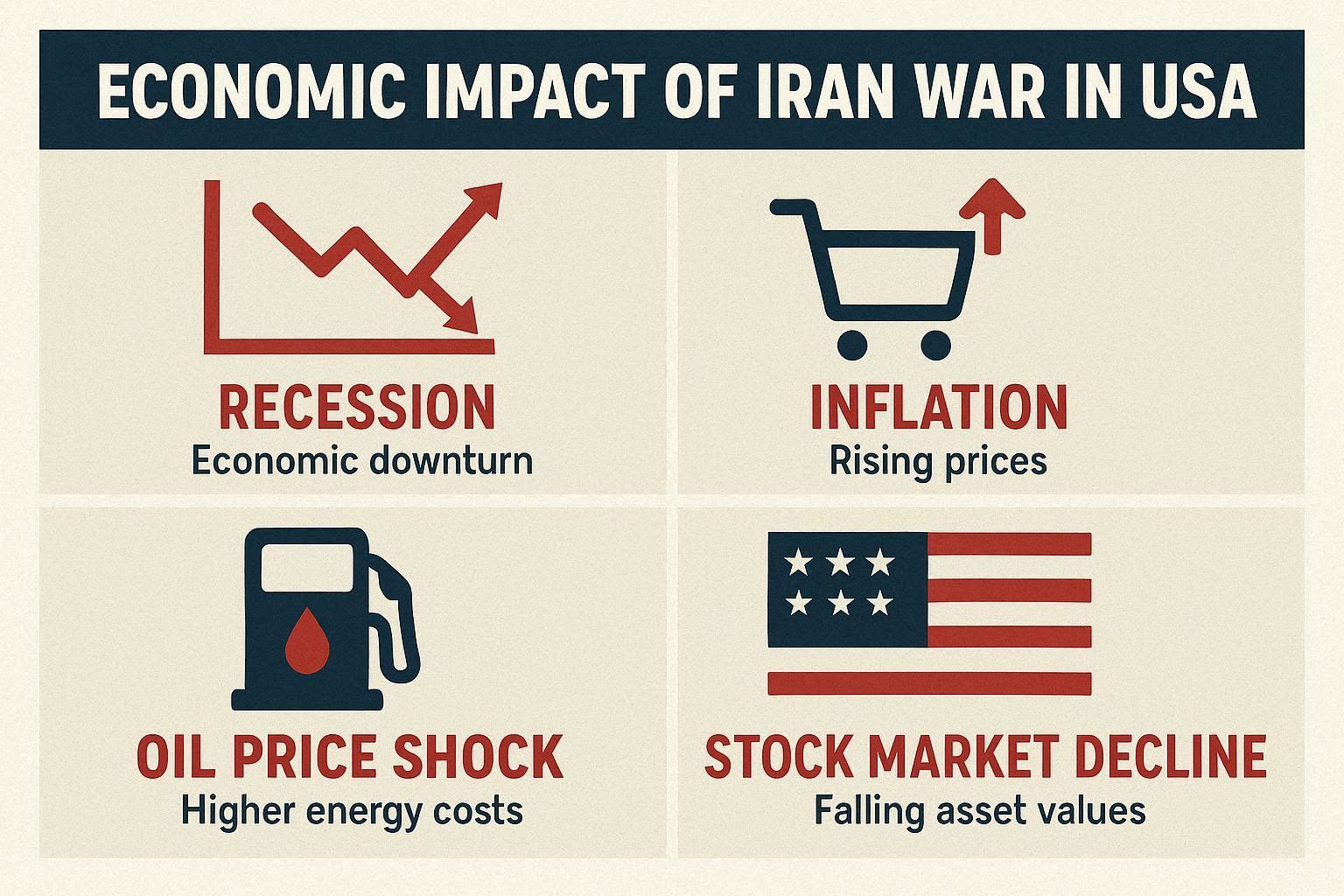
The economic ripple effects of the ongoing Iran conflict are beginning to surface across the United States, revealing both immediate and underlying challenges. While surging energy prices are the most visible consequence, deeper concerns around inflation, consumer spending, and economic growth are gradually emerging.
Energy Prices Take Center Stage
At the heart of the economic impact lies the sharp increase in oil prices. Analysts warn that crude oil levels will be a decisive factor in determining how severe the fallout becomes. According to Joseph Brusuelas, chief economist at RSM, if West Texas Intermediate (WTI) crude rises to around $125 per barrel, it could escalate into a significant economic problem.
Higher oil prices directly translate into increased costs for transportation, manufacturing, and household energy consumption. This, in turn, feeds into broader inflationary pressures—an issue the U.S. economy has been grappling with over the past few years.
Inflation: Immediate but Uncertain Impact
Inflation data is where the war’s influence is most clearly visible. However, the outlook remains mixed. If the current ceasefire holds, economists believe the inflationary spike may prove temporary, gradually easing as energy markets stabilize.
On the other hand, a resumption of hostilities could prolong elevated price levels, making inflation more persistent and harder to control. This uncertainty complicates policymaking, particularly for central banks trying to balance growth and price stability.
Modest Growth Impact—For Now
Despite growing concerns, most economists suggest that the war’s overall impact on U.S. gross domestic product (GDP) will remain limited in the short term. Current estimates indicate that economic growth may be reduced by only a few tenths of a percentage point.
Mike Skordeles, head of U.S. economics at Truist Advisory Services, notes that while the economy is resilient, the conflict will “gouge out some of the growth.” However, he emphasizes that the bigger issue is not the immediate slowdown but the prolonged uncertainty surrounding the situation.
Consumer Spending and Global Risks
The U.S. economy relies heavily on consumer spending, making households particularly vulnerable to rising fuel and energy costs. Persistent inflation could erode purchasing power, potentially dampening consumption and slowing economic momentum.
Additionally, countries that are less energy-independent may face even greater challenges, creating broader global economic instability that could indirectly affect the U.S. through trade and financial markets.
Federal Reserve Faces a Tough Call
The evolving situation places the Federal Reserve in a difficult position. While there had been expectations of interest rate cuts, ongoing geopolitical tensions and inflation risks are likely to delay such moves.
Economists believe the Fed is postponing—rather than canceling—rate cuts, potentially pushing them into the latter half of the year or beyond. This means borrowing costs for consumers and businesses could remain elevated for longer, adding another layer of pressure on economic activity.
Uncertainty Remains the Biggest Threat
Beyond the measurable impacts on oil prices and inflation, uncertainty itself has become a major economic risk. This uncertainty has been building since trade tensions escalated following policies introduced by Donald Trump in 2025 and has been further intensified by the current conflict.
The duration and trajectory of the Iran war will ultimately determine its economic consequences. A sustained ceasefire could stabilize markets and ease inflationary pressures. However, renewed conflict could deepen volatility, disrupt growth, and challenge policymakers world
For now, the U.S. economy appears resilient enough to absorb the initial shocks from the Iran conflict. However, the path ahead remains uncertain. Oil prices, inflation trends, and central bank responses will be critical in shaping the economic outlook in the months to come.
As the situation evolves, businesses, consumers, and policymakers alike will need to navigate a landscape defined less by immediate damage and more by the risks of prolonged instability.