
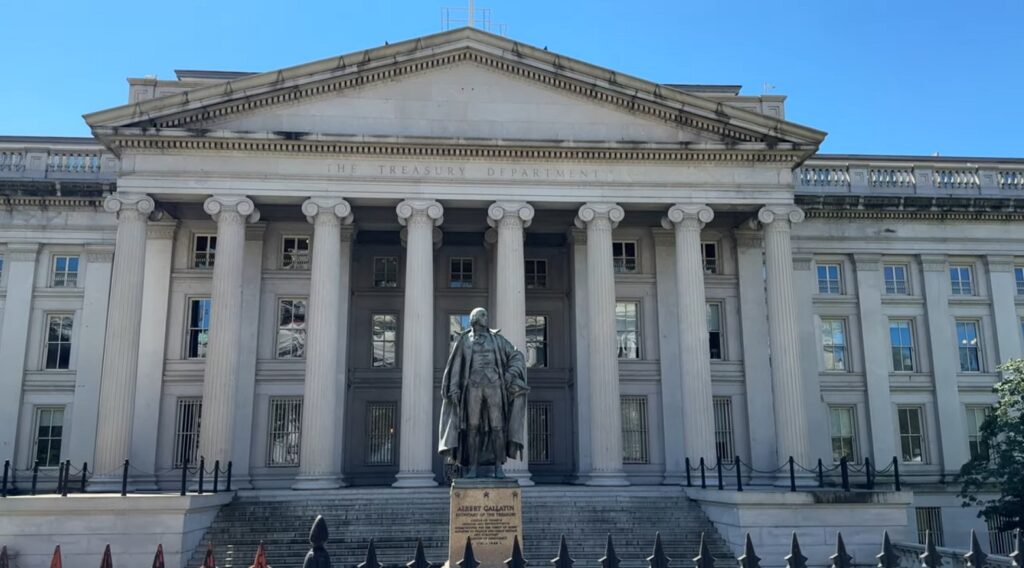
The U.S. budget deficit edged lower in 2025 as record-setting tariff collections helped counterbalance unprecedented payments on the ballooning national debt, the Treasury Department announced Thursday.
Despite a challenging fiscal year marked by high borrowing costs and a bruising trade war, the federal government ended with a $1.78 trillion deficit, about $41 billion (2.2%) lower than fiscal 2024. While still elevated by historical standards, the shortfall would have been far worse without a sharp rise in customs duties and a record $198 billion September surplus.
President Donald Trump’s sweeping tariff policies fueled a massive 142% surge in tariff revenues, generating $202 billion for the year. In September alone, tariff collections jumped 295% year-over-year to $30 billion, setting new records. Treasury officials said the improvement pushed the deficit-to-GDP ratio down to 5.9%, marking its lowest level since 2022. Typically, the ratio hovers near 3% outside periods of economic stress.
Treasury Secretary Scott Bessent praised the fiscal progress, noting that “we’re on our way to reducing the debt and deficit burden,” echoing recent Congressional Budget Office estimates showing the deficit-to-GDP ratio dipping below 6%.
However, the burden of servicing the nation’s $38 trillion debt continues to mount. Interest payments soared to over $1.2 trillion, the highest ever recorded and nearly $100 billion more than in 2024. Net interest payments, excluding Treasury investment income, hit $970 billion, surpassing defense spending by $57 billion and trailing only Social Security, Medicare, and healthcare costs.
Trump’s tariffs, imposed earlier this year despite warnings from economists, aimed to strengthen U.S. trade positions but raised concerns about inflation and consumer costs. While price hikes have been observed in some tariff-sensitive goods, the increases have been moderate so far.
Federal Reserve policymakers, viewing the inflationary impact as temporary, have signaled further interest rate cuts in the coming months. The federal funds rate currently stands at 4.00% to 4.25%, down from last year’s highs.
For the fiscal year ending in September, the U.S. government collected $5.2 trillion in revenue and spent just over $7 trillion, reflecting ongoing efforts to balance fiscal restraint with economic resilience amid global trade tensions and domestic spending pressures.
trusted cannabis store online with global delivery options